
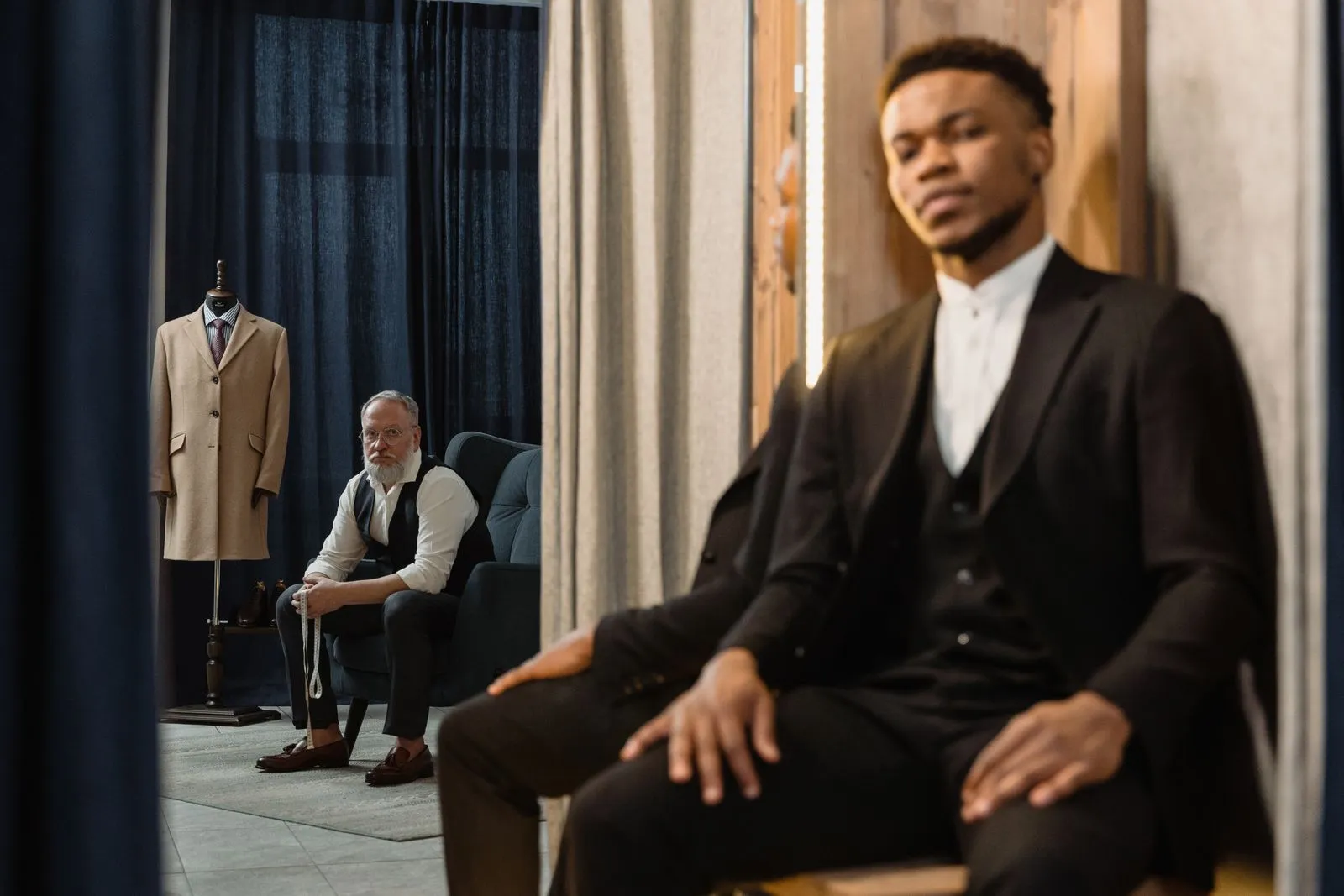
A made-to-measure suit fitting is more useful when you arrive with a clear picture of how you plan to wear the suit. Your clothing, shoes, and preferences can help guide choices about length, shape, and comfort. You do not need to know tailoring terms or make every decision in advance. A few practical preparations will help you explain what feels right, identify what needs to work with your wardrobe, and use your appointment time well.
Wear Clothes That Fit
Wear a dress shirt similar to the one you expect to pair with the suit. A shirt with the right collar and sleeve length helps you assess how the jacket sits at the neck and how much cuff shows. Choose a well-fitting shirt rather than one that is unusually tight or loose, since its proportions can affect your impression of the suit.
Bring or wear the shoes you plan to use most often with the suit. Shoe height can change how trousers fall and where their hems should sit. If the suit needs to work with more than one pair, bring the alternatives or describe their style and heel height. Avoid bulky layers that distort your natural shoulder or waist shape.
Bring Useful References
Bring a suit you already own if there is something about its fit you want to repeat or change. Point out specific details: perhaps the jacket pulls when buttoned, the sleeves feel short, or the trousers bunch at the ankles. A garment that fits well can also serve as a reference, but explain which parts you like rather than assuming its proportions should be copied exactly.
A few photos can make preferences easier to communicate. Save examples of lapels, pockets, vents, jacket length, or trouser shape that appeal to you. Include pictures of suits on people with a similar build when possible, and treat images as guides rather than exact templates. Also bring any relevant items, such as a belt or tie, if you want to coordinate the finished look.
Explain How You’ll Wear It
Start with the suit’s main purpose. A suit for frequent office wear may need to accommodate sitting, walking, and a range of shirts, while one for a formal event may call for a more specific styling plan. Share how often you expect to wear it, where you will wear it, and whether you need it to work across different settings.
Discuss how you want the suit to feel and look. Tell the fitter whether you prefer a closer shape or more room through the chest, waist, seat, and thighs. Mention any discomfort or fit issues you have had before, including restricted movement, collar gaps, or trousers that slip. Be direct about what you like, and try the garment in natural standing, sitting, and reaching positions.
Review Details and Movement
Once the initial fit is assessed, talk through design choices that affect the suit’s appearance and use. These may include lapel shape, button stance, pockets, vents, trouser rise, pleats, and cuff finish. Consider your existing wardrobe and how easily the choices will pair with shirts, shoes, and accessories you already own. Ask the fitter to explain tradeoffs when you are unsure.
Do not judge the fit only while standing still. Sit down, walk, raise your arms, and button or unbutton the jacket as you normally would. Note where fabric pulls, feels restrictive, or hangs more loosely than you prefer. Before you leave, confirm what adjustments or next steps are planned and ask when you should return for another fitting, if one is needed.
Prepare a few useful references, wear the right shirt and shoes, and be clear about how the suit needs to function. You do not have to settle every detail before the appointment; honest feedback helps shape the fit. When you are ready, contact Sierra Form to arrange a fitting and discuss what you need.